Quizvex Editorial Maintained by Quizvex Editorial, with methods, sources, and material corrections checked before publication.
What is the MBTI Framework?
The Myers-Briggs Type Indicator (MBTI) is a widely known personality framework based on four pairs of preferences. Combining one preference from each pair produces 16 four-letter personality types. It is one of several popular personality systems; others include the Enneagram, which focuses on motivations rather than the same four preference dimensions.
An MBTI-style result can offer language for noticing patterns in how you direct attention, take in information, make decisions, and approach plans. It describes preferences, not skills, fixed traits, or a person’s future.
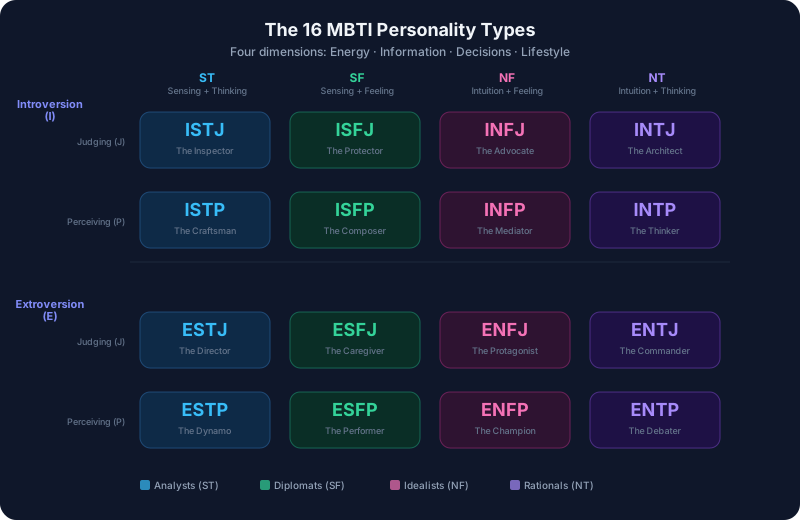
The Four Dimensions
Each dimension describes a relative preference. People can use both sides, and their behavior may change with context, experience, and current needs.
Extraversion (E) vs. Introversion (I)
This dimension describes where you may prefer to direct your attention and restore energy:
- People who prefer Extraversion may develop ideas through interaction and external activity
- People who prefer Introversion may prefer time to reflect before sharing their thoughts
It is not a measure of social ability, confidence, or shyness.
Sensing (S) vs. Intuition (N)
This dimension describes what you may notice first when taking in information:
- People who prefer Sensing tend to begin with concrete facts, details, and current experience
- People who prefer Intuition tend to begin with patterns, connections, and possibilities
People with either preference can work with practical details and abstract ideas. The preferences simply suggest different starting points.
Thinking (T) vs. Feeling (F)
This dimension describes what you may prioritize when weighing a decision:
- People who prefer Thinking may first examine logic, consistency, and general principles
- People who prefer Feeling may first consider values, individual needs, and effects on people
This distinction is not a measure of intelligence or empathy, and everyone can use both perspectives.
Judging (J) vs. Perceiving (P)
This dimension describes the rhythm you may prefer when dealing with plans and the outside world:
- People who prefer Judging tend to appreciate defined plans, decisions, and closure
- People who prefer Perceiving tend to appreciate flexibility, emerging information, and open options
It does not determine discipline, reliability, or adaptability.
The 16 Types
The four dimensions combine into the following 16 types. These summaries describe possible preferences rather than abilities or outcomes. Select a type name to read its fuller profile.
Analysts
INTJ — The Architect
INTJs may prefer to organize complex information into a long-term framework. They often value independent thinking and logical consistency, while their actual planning and execution depend on the person and situation.
INTP — The Logician
INTPs tend to examine assumptions, models, and exceptions. They may enjoy keeping an idea open while testing its logic, and can benefit from pausing to turn exploration into a practical next step.
ENTJ — The Commander
ENTJs may prefer clear objectives, standards, and action sequences. Their communication can be direct, but a type code does not determine how any individual leads or collaborates.
ENTP — The Debater
ENTPs often show interest in new angles and alternative solutions. They may use discussion to test an idea and may need deliberate follow-through when attention shifts to another possibility.
Diplomats
INFJ — The Advocate
INFJs may pay attention to long-term meaning, personal values, and other people’s perspectives. When interactions become intense, they may prefer time to process and clarify their own boundaries.
INFP — The Mediator
INFPs often look for choices that feel authentic to their values. In disagreement, they may first consider personal meaning and emotions before deciding how to respond.
ENFJ — The Protagonist
ENFJs may notice group atmosphere and whether people understand a shared direction. They can prefer collaborative communication, though individuals vary widely in how they support or influence others.
ENFP — The Campaigner
ENFPs tend to notice connections among people, ideas, and new experiences. When many options appear, setting priorities may help them decide where to focus their energy.
Sentinels
ISTJ — The Logistician
ISTJs often value clear facts, established expectations, and steps that can be checked. They may still adjust their approach when reliable new information becomes available.
ISFJ — The Defender
ISFJs may notice specific needs and draw on past experience in everyday cooperation. Stating their available time and energy can make expectations clearer when they are supporting others.
ESTJ — The Executive
ESTJs tend to prefer explicit goals, responsibilities, and timelines. Leaving room for discussion can help them consider useful information that is not yet fully developed.
ESFJ — The Consul
ESFJs may pay attention to group feedback, shared expectations, and practical needs. They often value harmony, but that preference does not mean every disagreement must be removed.
Explorers
ISTP — The Virtuoso
ISTPs often prefer to understand how a system works through practical information and experimentation. In longer collaborations, sharing their process and expectations may reduce information gaps.
ISFP — The Adventurer
ISFPs may express personal values through actions, choices, and attention to experience. Whether they discuss feelings immediately depends on the context and the individual.
ESTP — The Entrepreneur
ESTPs tend to notice current information and immediate feedback. After acting on what is available, they may find it useful to review how a decision affects later plans.
ESFP — The Entertainer
ESFPs may focus on shared experiences and the atmosphere around them. Their response to change still depends on personal circumstances, resources, and the people involved.
How to Use Your Type
Type information is most useful as a prompt for reflection, not as a verdict. You can compare a result with your behavior across different situations and keep the parts that help you ask clearer questions.
Career Planning
A type may suggest questions about preferred work structure or communication, but it cannot determine career suitability or predict performance. Skills, interests, opportunities, experience, and working conditions all matter.
Relationships
Type differences can provide vocabulary for discussing how people give feedback, process conflict, or ask for space. Use the MBTI compatibility tool only as a starting point for discussing communication preferences. It does not determine whether two people are a good match, guarantee compatibility, or predict relationship outcomes.
For a closer look at neighboring types, read INTJ vs. INTP and ISFJ vs. INFJ. These comparisons show how one changed letter may shift the preference being discussed without deciding who a person is.
Personal Growth
You can use the dimensions to notice a familiar habit and experiment with another approach. Growth is individual and is not limited by a four-letter label.
Team Dynamics
Teams can discuss differences in planning, information sharing, and decision making without treating type as competence. A mix of type labels does not predict team performance.
Common Misconceptions
- Types are not boxes: A result describes relative preferences, not rigid categories
- No type is better: A type code does not rank ability, character, or potential
- Behavior varies: Context and experience can affect how preferences appear
- It is not a scientific conclusion: Researchers commonly use other models, including the Big Five model, for scientific personality research
Usage Boundaries
This article and its related tools are only for entertainment, self-exploration, and reflection on communication. They are not a scientific conclusion or professional assessment. Do not use type results for clinical diagnosis, hiring decisions, or career suitability.
Take the Next Step
Curious about your four-letter preference result? Take the free MBTI-style personality test and answer 68 questions across the four dimensions. You will receive your result instantly, with no registration required. Treat the result as a starting point for further reflection rather than a fixed label.