What is the Big Five Model?
The Big Five personality model, also known as the Five-Factor Model (FFM) or OCEAN model, is the most scientifically validated framework for understanding personality differences. Unlike popular personality systems such as the MBTI or Enneagram, the Big Five emerged directly from decades of empirical research in academic psychology. It wasn’t invented by a single theorist — it was discovered through statistical analysis of how people describe themselves and others.
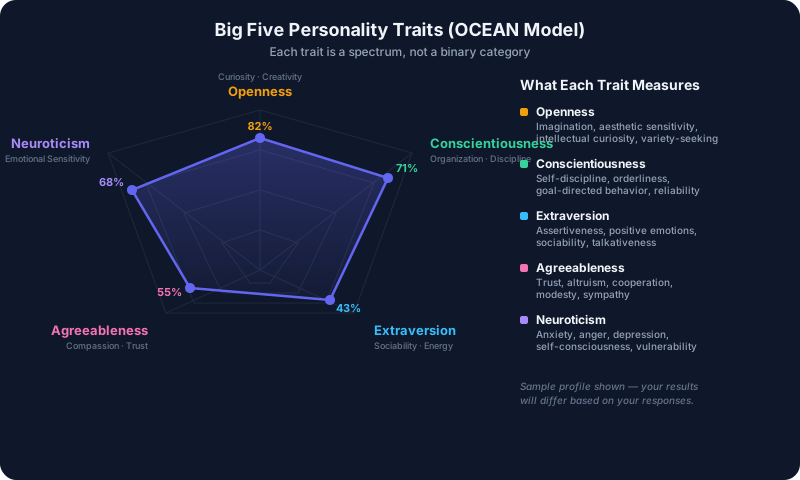
The model describes personality along five broad dimensions: Openness to Experience, Conscientiousness, Extraversion, Agreeableness, and Neuroticism (forming the acronym OCEAN). Rather than placing you into a fixed type, the Big Five measures where you fall on a spectrum for each trait, producing a nuanced profile that captures the complexity of human personality.
The American Psychological Association (APA) recognizes the Big Five as the dominant model in personality psychology. Research supporting this framework spans over 60 years and includes studies conducted across dozens of countries and cultures.
The Scientific Foundation
The Big Five emerged from the lexical hypothesis — the idea that the most important personality differences are encoded in natural language. In the 1930s and 1940s, researchers Gordon Allport and Henry Odbert identified nearly 18,000 English words describing personality. Later researchers, including Raymond Cattell, used factor analysis (a statistical technique for identifying underlying patterns) to reduce these thousands of descriptors to a manageable number of core dimensions.
By the 1980s and 1990s, researchers including Lewis Goldberg, Paul Costa, and Robert McCrae had converged on five robust factors that consistently emerged across different studies, languages, and cultures. Costa and McCrae developed the NEO Personality Inventory (NEO-PI-R), which became the standard assessment tool for measuring the Big Five and has been validated in research published in journals like the Journal of Personality and Social Psychology.
What makes the Big Five especially compelling is its cross-cultural validity. Studies conducted in more than 50 countries — from Western industrialized nations to traditional societies in Africa and Asia — have found the same five factors emerging from personality data. This suggests that these dimensions reflect something fundamental about human personality rather than being artifacts of a particular culture.
The Five Traits in Detail
1. Openness to Experience
Openness reflects a person’s willingness to engage with new ideas, experiences, and unconventional ways of thinking. It captures intellectual curiosity, aesthetic sensitivity, and imaginative depth.
High Openness: People high in Openness tend to be curious, creative, and drawn to novelty. They enjoy art, philosophy, and abstract thinking. They’re more likely to hold unconventional beliefs, seek out diverse experiences, and embrace change. They often have wide-ranging interests and a rich inner life.
Low Openness: People low in Openness (sometimes called “Closedness” or described as “conventional”) prefer familiarity, routine, and practical thinking. They tend to be more traditional in their values, straightforward in their thinking, and comfortable with established ways of doing things. This is not a deficiency — it reflects a preference for stability and pragmatism.
Research findings: Openness is the strongest Big Five predictor of creative achievement. It’s positively associated with artistic interests, liberal political attitudes, and willingness to try new foods, travel to new places, and consider alternative viewpoints. According to research reviewed by the APA, high Openness is also associated with greater cognitive flexibility in older adults.
2. Conscientiousness
Conscientiousness reflects a person’s tendency toward self-discipline, organization, and goal-directed behavior. It captures how reliable, orderly, and deliberate a person is in their approach to life.
High Conscientiousness: Highly conscientious individuals are organized, dependable, and hardworking. They plan ahead, follow through on commitments, and maintain high standards. They tend to be punctual, detail-oriented, and persistent in pursuing their goals.
Low Conscientiousness: People low in Conscientiousness tend to be more spontaneous, flexible, and casual in their approach to tasks. They may struggle with procrastination, disorganization, or following through on plans. However, they can also be more adaptable and less rigid in response to unexpected changes.
Research findings: Conscientiousness is the strongest personality predictor of job performance across virtually all occupations, according to meta-analyses published in Psychological Bulletin. It’s also one of the strongest personality predictors of academic achievement, health outcomes, and longevity. Highly conscientious people tend to live longer, partly because they’re more likely to exercise, eat well, follow medical advice, and avoid risky behaviors.
3. Extraversion
Extraversion reflects a person’s tendency toward sociability, assertiveness, and positive emotionality. It captures how energized a person is by social interaction and external stimulation.
High Extraversion: Extraverts are outgoing, talkative, and energetic. They enjoy being around people, seek out social situations, and tend to experience frequent positive emotions like enthusiasm and excitement. They’re often comfortable in leadership roles and thrive in stimulating environments.
Low Extraversion (Introversion): Introverts are quieter, more reserved, and more comfortable with solitude or small-group interactions. They tend to be more reflective and less dependent on external stimulation for satisfaction. Introversion is not shyness (which involves anxiety about social judgment) — it’s a preference for less stimulating environments.
Research findings: Extraversion is consistently associated with subjective well-being and positive emotions across cultures. Extraverts tend to report higher levels of happiness, though introverts can be equally satisfied with life when their environments match their preferences. Research published in the Journal of Research in Personality has shown that extraverts tend to perform better in sales roles and leadership positions, while introverts often excel in roles requiring deep focus and independent work.
4. Agreeableness
Agreeableness reflects a person’s tendency toward cooperation, trust, and concern for others. It captures how motivated a person is to maintain positive social relationships and prioritize others’ needs.
High Agreeableness: Agreeable individuals are warm, empathetic, and cooperative. They tend to trust others, avoid conflict, and prioritize harmony in relationships. They’re often described as kind, generous, and considerate. They excel in caregiving roles and team-oriented environments.
Low Agreeableness: People low in Agreeableness tend to be more competitive, skeptical, and willing to challenge others. They prioritize their own interests and are comfortable with confrontation. While this can sometimes manifest as abrasiveness, it can also reflect valuable qualities like critical thinking, assertiveness, and willingness to make tough decisions.
Research findings: Agreeableness predicts relationship satisfaction and prosocial behavior. However, highly agreeable people may be at a disadvantage in competitive or adversarial contexts. Research published in the Journal of Personality and Social Psychology has found that lower Agreeableness is associated with higher earnings, particularly for men, likely because less agreeable individuals are more willing to negotiate aggressively and prioritize their own advancement.
5. Neuroticism
Neuroticism reflects a person’s tendency toward negative emotions such as anxiety, sadness, irritability, and emotional instability. It captures how reactive a person’s emotional system is to stress and perceived threats.
High Neuroticism: People high in Neuroticism experience negative emotions more frequently and intensely. They tend to be more reactive to stress, more prone to worry, and more likely to interpret ambiguous situations as threatening. They may struggle with mood swings, self-doubt, and emotional overwhelm.
Low Neuroticism (Emotional Stability): Emotionally stable individuals are calm, even-tempered, and resilient under stress. They recover more quickly from setbacks and are less likely to be derailed by negative emotions. They tend to maintain a steady emotional baseline even in challenging circumstances.
Research findings: High Neuroticism is the strongest personality predictor of mental health problems, including depression, anxiety disorders, and substance abuse, according to research reviewed by the APA. However, moderate levels of Neuroticism can serve an adaptive function — heightened threat sensitivity can help people avoid genuine dangers. The key is whether negative emotions motivate protective action or lead to paralysis and rumination.
How the Big Five Traits Interact
No single trait operates in isolation. Your personality is shaped by the unique combination of all five traits together. For example:
- High Openness + High Conscientiousness: A creative person who can also execute and follow through — common among successful entrepreneurs and innovators.
- High Extraversion + High Agreeableness: A warm, socially engaged person who builds relationships easily — common among successful therapists, teachers, and community leaders.
- High Neuroticism + Low Agreeableness: A person who experiences intense negative emotions and is willing to express dissatisfaction — may be drawn to activism, criticism, or advocacy.
- Low Extraversion + High Conscientiousness: A quiet, disciplined person who works steadily and independently — common among successful researchers, writers, and engineers.
These interactions are what make the Big Five a dimensional model rather than a typological one. There are no “types” to be sorted into — instead, there are infinite combinations that reflect the true complexity of human personality.
What Recent Research Reveals About Personality at Work
The Big Five’s most important practical application is in the workplace, and 2025 research has significantly deepened our understanding of how these traits interact with modern work conditions.
Conscientiousness and Career Success
A longitudinal study of over 1,700 employees at a multinational company confirmed that conscientiousness is positively associated with promotions — but with an interesting nuance. Conscientious people advance more reliably across most roles, but in highly creative occupations (artistic, investigative, social work), conscientiousness can actually become a liability. The orderly, rule-following tendencies that make someone excellent at compliance work may impede the spontaneity and rule-breaking that creative roles reward.
What this means practically: if you score high on conscientiousness and find yourself in a creative role that feels constraining, it’s not a character flaw — it may genuinely be a poor environment fit.
Openness to Experience in the Age of AI
A 2025 framework presented at the Academy of Management explores how Big Five traits shape individuals’ relationships with AI in the workplace. High-Openness individuals appear to embrace AI tools more readily and find innovative applications, while using AI to amplify rather than replace their creative thinking. Conscientious individuals tend to use AI in systematic, verification-heavy ways — carefully checking outputs rather than accepting them uncritically.
This suggests that in AI-augmented workplaces, the interaction between your personality and how you approach new tools may matter as much as raw skill.
Remote Work and Extraversion
A 2025 study found that extraversion negatively correlates with willingness to work remotely — extraverts tend to find remote work less satisfying and productive. Both conscientiousness and openness positively predicted productivity in remote settings. For organizations managing hybrid teams, this research supports the intuition that some employees aren’t performing poorly remotely due to lack of effort — their personality genuinely makes in-person environments more effective for them.
Agreeableness: The Double-Edged Trait
High agreeableness is valuable for building relationships and maintaining team cohesion, but research consistently finds it’s associated with lower earnings — particularly for men. Highly agreeable people may be systematically disadvantaged in salary negotiations, performance reviews, and competitive promotion decisions. Understanding this isn’t an argument for becoming less agreeable; it’s an argument for developing specific assertiveness skills that counterbalance the natural tendency.
Practical Applications
The Big Five has real-world applications across many domains:
Career planning: High Conscientiousness suits roles where reliability and precision matter (finance, project management, healthcare). High Openness suits roles that reward creativity and intellectual flexibility (research, design, strategy). High Extraversion suits roles requiring social energy (sales, leadership, teaching). High Agreeableness suits roles requiring trust-building (social work, HR, customer relationships). Low Neuroticism matters most in high-pressure roles (emergency services, surgery, trading).
Relationship understanding: Research on couples finds that matched Openness levels predict relationship satisfaction more strongly than matched Extraversion. People who differ significantly in Conscientiousness (one very organized, one very spontaneous) often experience friction around household management, finances, and punctuality. Naming these differences using a shared framework tends to reduce personal blame.
Personal development: Identify your extremes. Someone very low in Conscientiousness often benefits more from external accountability systems (accountability partners, public commitments, scheduled check-ins) than from trying to become more disciplined through willpower alone. Someone very high in Neuroticism often benefits from structured stress management practices rather than general self-improvement advice.
Mental health: Therapists use Big Five profiles to understand clients’ baseline emotional reactivity. High Neuroticism doesn’t cause mental health problems — but it does mean someone is more vulnerable to developing anxiety or depression when life circumstances are difficult. Understanding this can reduce self-blame and point toward appropriate preventive care.
Limitations and Criticisms
Despite its strong scientific backing, the Big Five is not without limitations:
- Descriptive, not explanatory: The model describes personality patterns but doesn’t fully explain why people differ (though genetics accounts for roughly 40–60% of trait variance, with environmental factors making up the rest).
- Cultural nuance: While the five factors appear across cultures, the specific behaviors associated with each trait vary by cultural context. High Agreeableness in Japan looks different from high Agreeableness in the United States.
- Situation sensitivity: People don’t behave identically across all situations. The Big Five captures general tendencies, not rigid rules. You might be highly introverted at work and noticeably more outgoing with close friends.
- Potential for additional factors: Some researchers argue for a sixth factor (Honesty-Humility, as in the HEXACO model) that captures sincere versus exploitative interpersonal behavior.
Conclusion
The Big Five personality model represents the closest thing psychology has to a consensus framework for understanding personality. Its foundation in decades of empirical research, cross-cultural replication, and predictive validity makes it the most scientifically credible personality model available.
Understanding where you fall on each of the five dimensions offers genuine insight into your behavioral tendencies, emotional patterns, and interpersonal style. Unlike personality “types” that put you in a fixed box, the Big Five acknowledges that personality exists on a spectrum — and that every combination of traits brings both strengths and challenges.
One final note: these traits are relatively stable across adulthood, but they’re not fixed. Conscientiousness tends to increase with age as people take on more responsibilities. Neuroticism tends to decrease. The traits you measure today are a description of your current personality, not a permanent sentence.
Take our personality test to discover your Big Five profile and see how these fundamental dimensions shape your daily life, relationships, and career.